

From the Modcare workshop
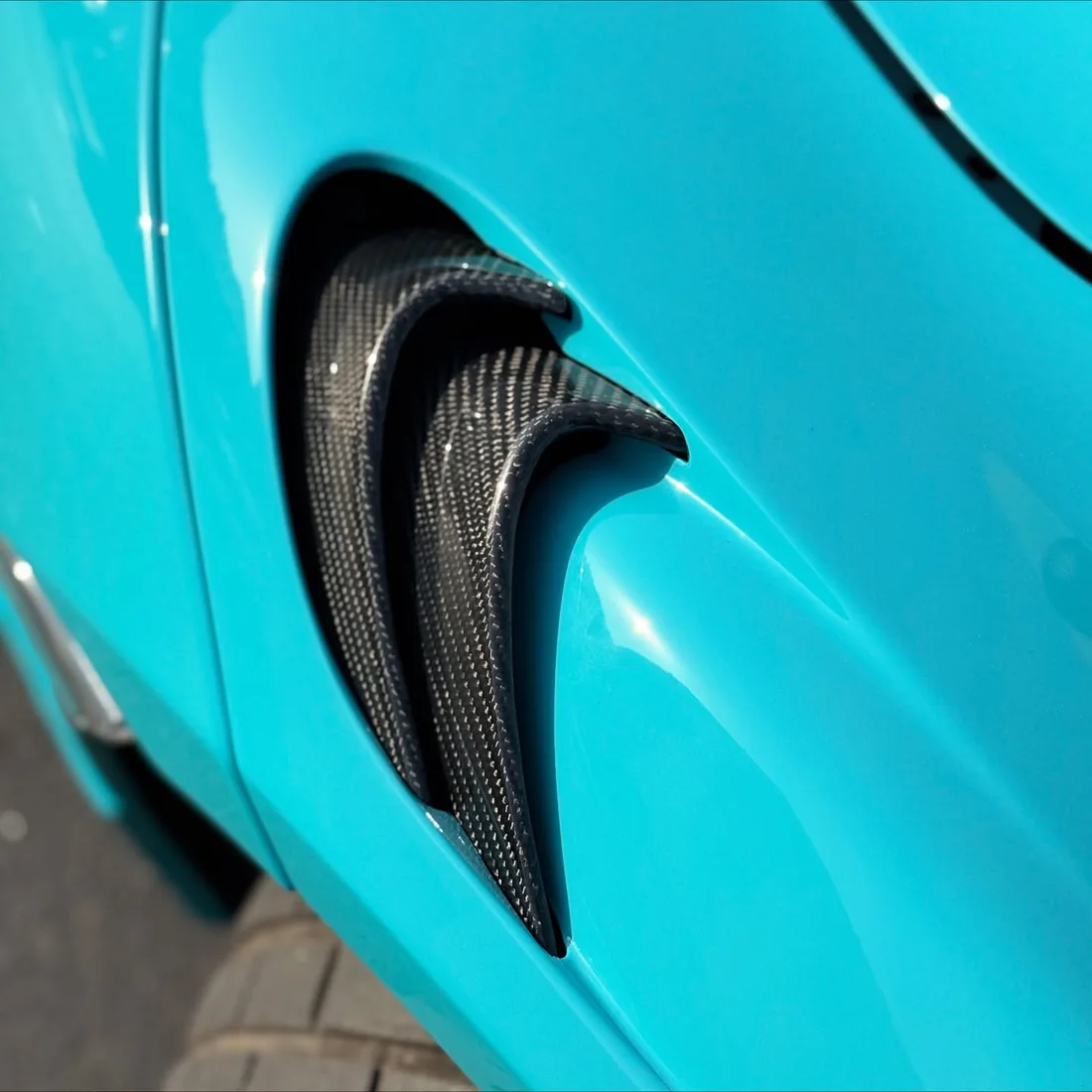
A chipped McLaren louvre, rebuilt
The end of a carbon louvre on this McLaren 750S had been chipped away. With a section missing, polishing or applying fresh clear coat would not restore its shape.
Modcare fabricated a new piece, moulded it into the damaged area and re-wove the carbon before finishing the repair. These photographs show the part before and after the work, from different angles.
Does the clear coat need work, or the carbon itself?
Clouding, peeling clear coat and a broken carbon edge can all spoil a part's appearance. The repair depends on where the damage is.
If the carbon underneath is sound, Modcare can remove the failed clear coat and refinish the surface. There is no missing shape to rebuild in that case. The fresh finish restores the depth and gloss of the weave beneath.
A crack, chipped corner or damaged weave needs a different assessment. Where repair is suitable, the damaged section can be rebuilt with new carbon, then finished to match the surrounding part. The McLaren louvre is an example of this work.
Tell the workshop about any impact or earlier repair, and show the whole component as well as the visible damage. The part's construction, mounting points and condition affect what can be repaired. Photographs help with an initial assessment; some parts need an inspection before the repair can be confirmed.
Repair or order a replacement?
A damaged detail does not always require a complete OEM replacement. Rebuilding a suitable part may avoid ordering the whole component, particularly when the damage is confined to one area.
The cost and timing depend on the repair required and the replacement available. Modcare confirms the proposed work and price after assessing the part.
The current turnaround guidance is typically 2–3 days for clear-coat refinishing and 3–5 days for carbon part repair. Confirm the timing for your component before booking; it depends on the damage and work required.
Lamination and carbon conversion are different services
Repair deals with carbon that is already damaged. Lamination and conversion are ways to change or replace an existing part.
Lamination with genuine carbon fibre
Lamination, also called a real carbon overlay, adds genuine carbon weave and resin over an existing component. The original part stays underneath the finished carbon surface.
This can be used on suitable interior trim and exterior details. It gives the part a real carbon finish; it does not turn the retained component into a separately manufactured, lightweight carbon part. Carbon-look vinyl is different again: it is a patterned film, rather than genuine carbon weave.
Carbon conversion and bespoke manufacture
For a carbon conversion, Modcare takes a mould from the original component and manufactures a separate full-carbon replacement. The original part remains intact and can be kept. See how Modcare makes a new carbon fibre part from a mould.
Modcare also manufactures bespoke carbon body kit parts from its own moulds, with natural weave, forged and coloured carbon options. The team confirms the shape, fit and finish for the individual part.
Matching the surrounding carbon
The weave needs attention as well as the outline of the repair. Its direction is visible on a louvre, mirror cap or trim piece, especially beside undamaged carbon.
Include photographs of the surrounding material when requesting a repair. For lamination or a new part, show any existing carbon it needs to sit beside. Modcare can then discuss the type of carbon and expected finish using the actual parts, rather than a reference image alone.
What to send for a carbon repair quote
Start with the vehicle make and model and a short explanation of what happened. Useful photographs are:
- A full view of the part and where it fits on the car.
- Close-ups of the damage from more than one angle.
- The nearby weave, edges and visible mounting points.
If the part has been removed or repaired before, mention that too. For an upgrade, say whether you want to keep the existing part beneath a carbon finish or have a separate replacement made. The carbon fibre services page explains the work available and includes the enquiry form.
Common questions
Can a missing section of carbon fibre be rebuilt?
Some components can be reconstructed. On the McLaren louvre shown here, Modcare fabricated and moulded a new piece before re-weaving and finishing the repair. Suitability depends on the component and damage.
Does peeling clear coat mean the carbon part needs replacing?
Not necessarily. Where the underlying carbon is sound, the failed clear coat can be removed and the part refinished. Damage to the fibre itself requires a separate repair assessment.
Is carbon lamination the same as carbon conversion?
No. Lamination adds genuine carbon weave and resin over the existing part. Carbon conversion uses a mould of the original to manufacture a separate full-carbon replacement, leaving the original intact.
Can you confirm a repair from photographs?
Photographs let the workshop review the visible damage and discuss the next step. An inspection may still be needed to confirm suitability, the repair method and the price.