

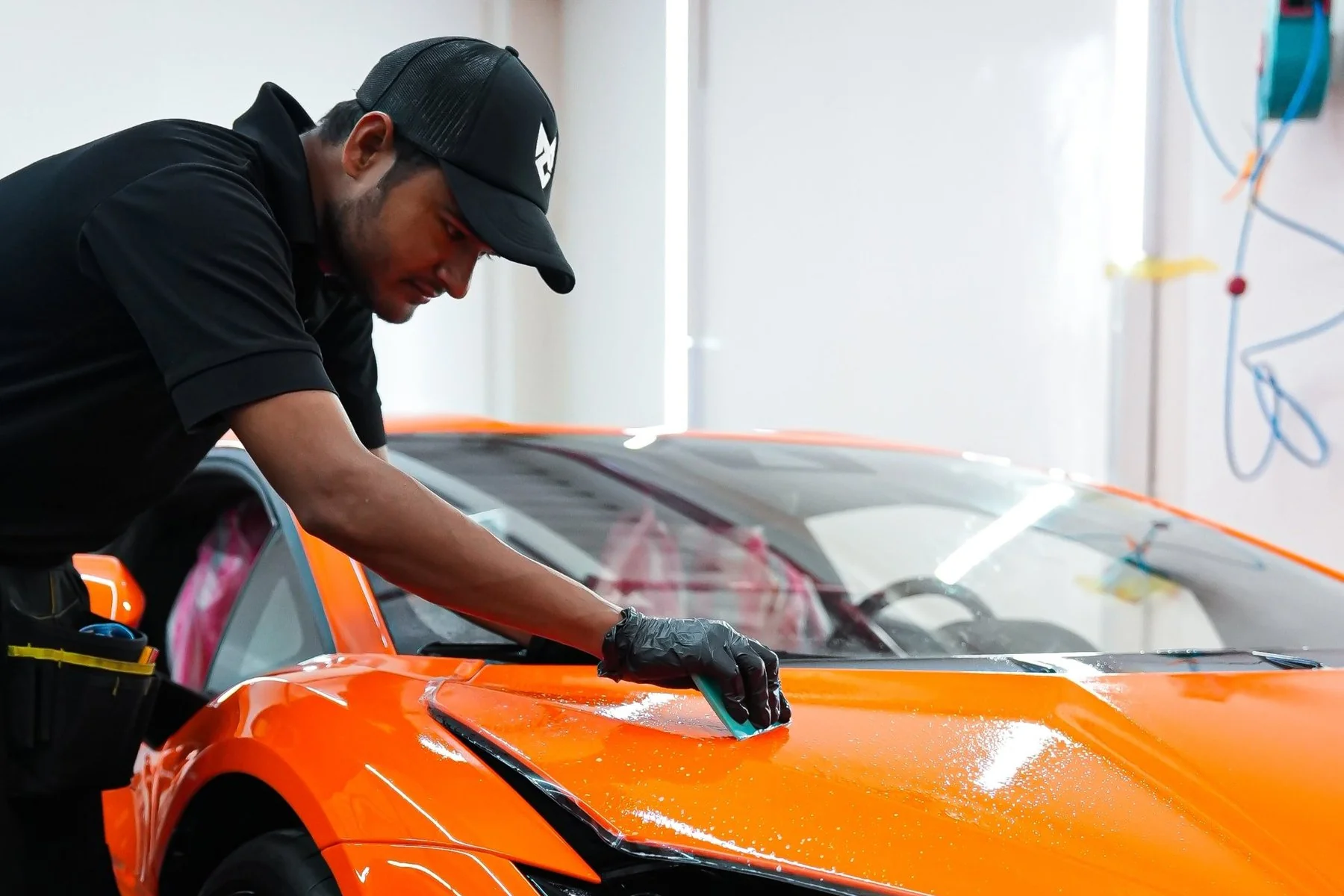
This is the aftercare guide we give our own clients, written out in full.
The first ten days: what to do and what to leave alone
Bring the car back within ten days for the first recheck, and until then do not wash it or touch the film. The recheck is free and it is not optional in any practical sense: it is the visit where the film gets its first proper wash, the temporary edge guards come off, and anything that lifted while settling gets corrected.
Two things to avoid in that window:
Do not wash the car yourself. The car leaves us clean inside and out, so there is nothing to wash off. The first wash after installation should be ours, because a wash done wrong on film that is still settling can lift an edge that would otherwise have bonded cleanly.
Do not press, puncture or try to fix the film yourself. The film is still moving into place, and a home correction leaves a permanent mark. More on that below.
What is normal in the first days, and what to do about it
Small bubbles and slight lifting at the edges are both normal while the film settles. Neither means the installation has failed, and in almost every case both resolve. What matters is what you do while they are there.
Bubbles
Bubbles filled with moisture appear as the film settles, and they dry out on their own.
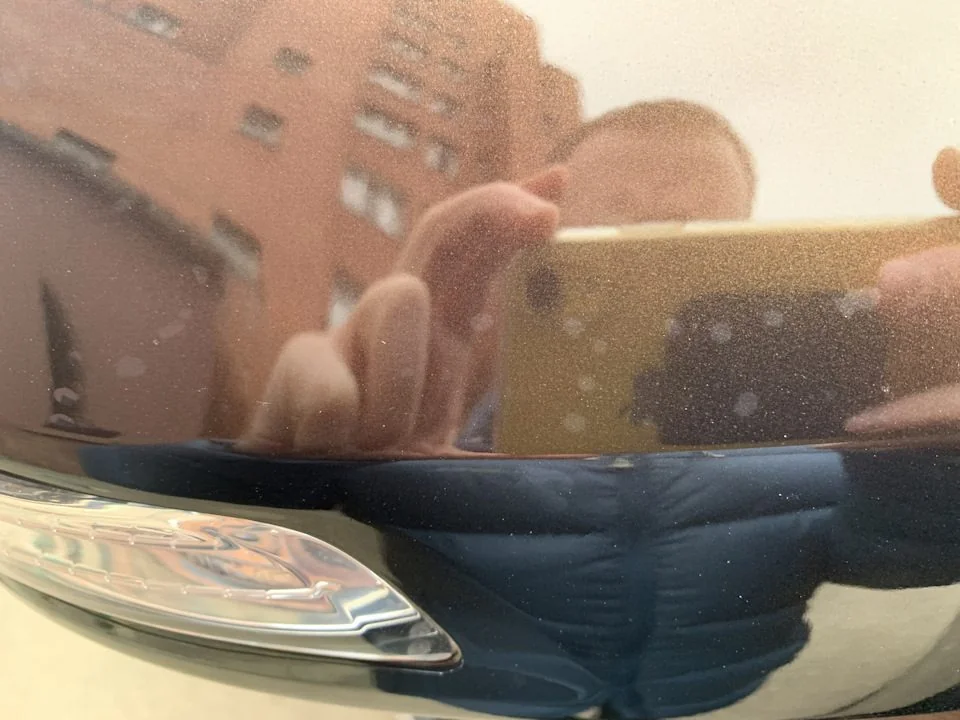
Do not press them out. This is the one thing that turns a temporary bubble into a permanent defect. If a bubble is pressed or smoothed while the film is still wet underneath, the outline of that bubble can stay under the film as a visible border — and unlike the bubble itself, the border does not disappear.
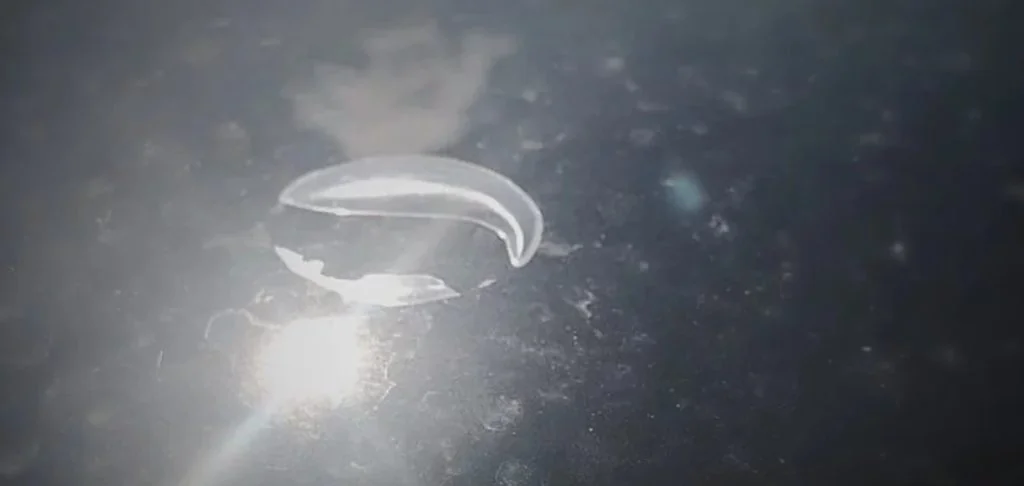
In our experience, bubbles resolve on their own in about 95% of cases. The remaining ones are dealt with at the recheck.
Small lifts at the edges
While the film is still damp it can lift slightly at an edge. That is normal too — but unlike bubbles, lifting is time-sensitive.
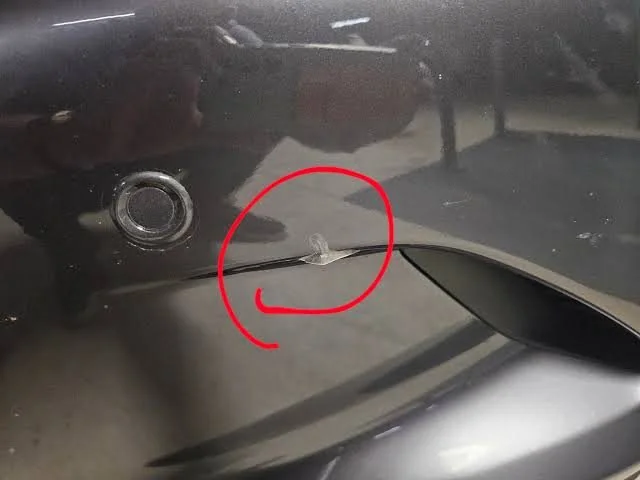
If you notice a lift, come in for correction sooner rather than later. While the adhesive is clean it bonds back down firmly. Once dust settles into the exposed adhesive layer, it will not stick back, and that section has to be redone.
Why lifts happen at all
Our installers work with as few seams and joins as possible and wrap the edges rather than trimming them at the panel line. That is what makes an installation invisible — and it is also why film occasionally stands up on complex, strongly curved shapes or right at an edge: the film is being asked to hold a shape under tension.
Humidity plays a part too. Dubai air carries more moisture than people expect, and moisture directly affects how the adhesive grips during the settling period.
What we actually see on cars coming in for their recheck is small lifts, nearly all of them easy to correct and firm once they are set down onto film that has dried.
What actually happens at the ten-day recheck
- The first decontamination wash. Done with materials chosen for filmed and ceramic-coated surfaces, not a standard wash.
- The edge guards come off. During installation, guards are placed over the film's edges to protect them while the adhesive cures. They are temporary and they come off at this visit.
- Covered sensors are uncovered. Sensors that were masked during the work are returned to normal.
- Any lifting or peeling is addressed. This is the point of the visit. Correcting a lifted edge at ten days is a five-minute job; correcting it once dust has reached the adhesive is not.
Considering bespoke PPF?
Speak to the Modcare team about protecting your car.
How you can help the film last
Washing
Tell whoever washes the car that it has film on it, and insist on a fresh microfibre towel and pH-neutral shampoo. Those two requests prevent most of the damage we see.
If the car goes through a manual or pressure wash, the nozzle should stay at least three feet from the surface. Pressure directed into an edge is how film gets lifted, and this matters more here than in cooler climates: sand sitting on the panel turns any close-range jet into an abrasive.
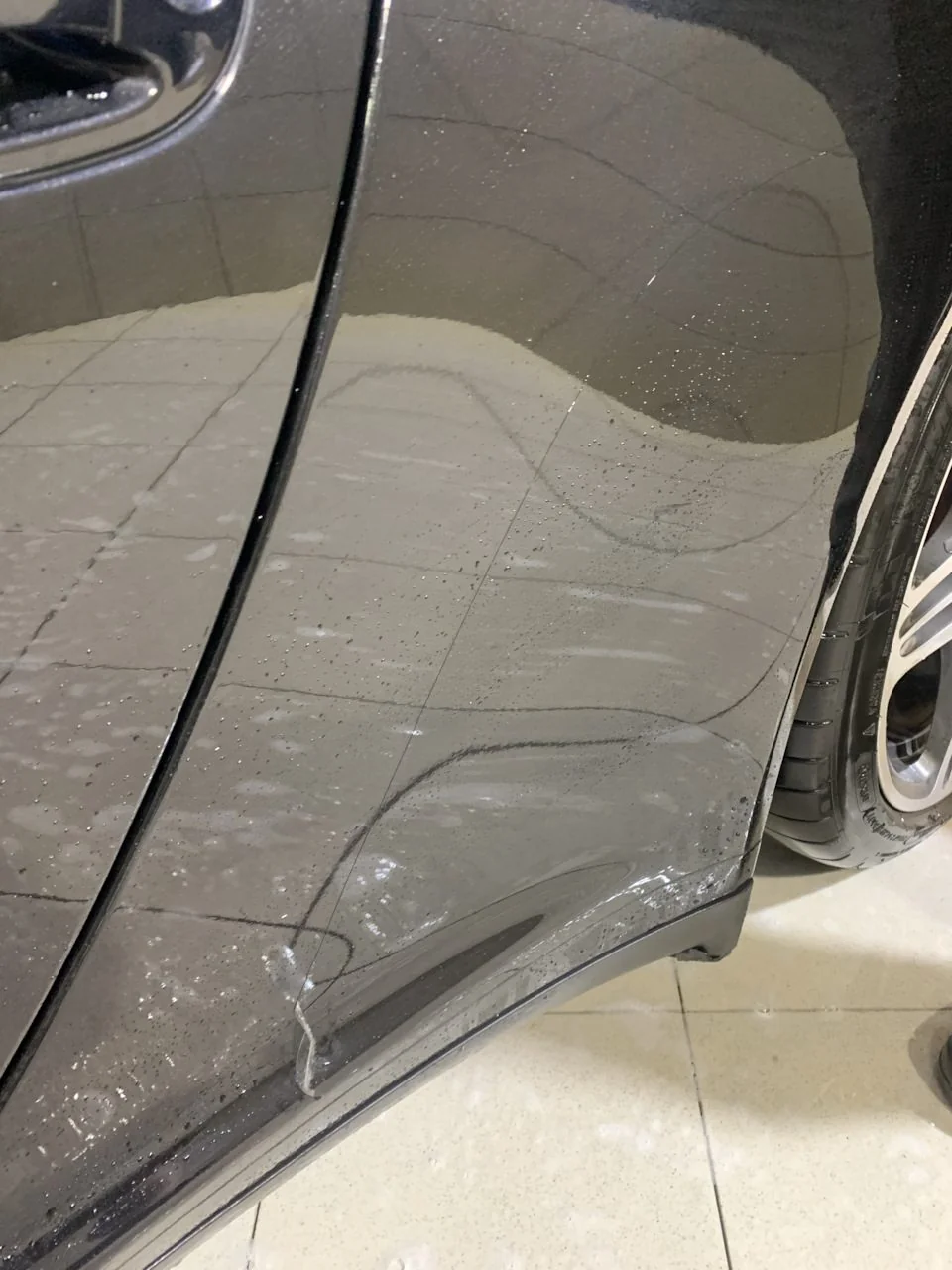
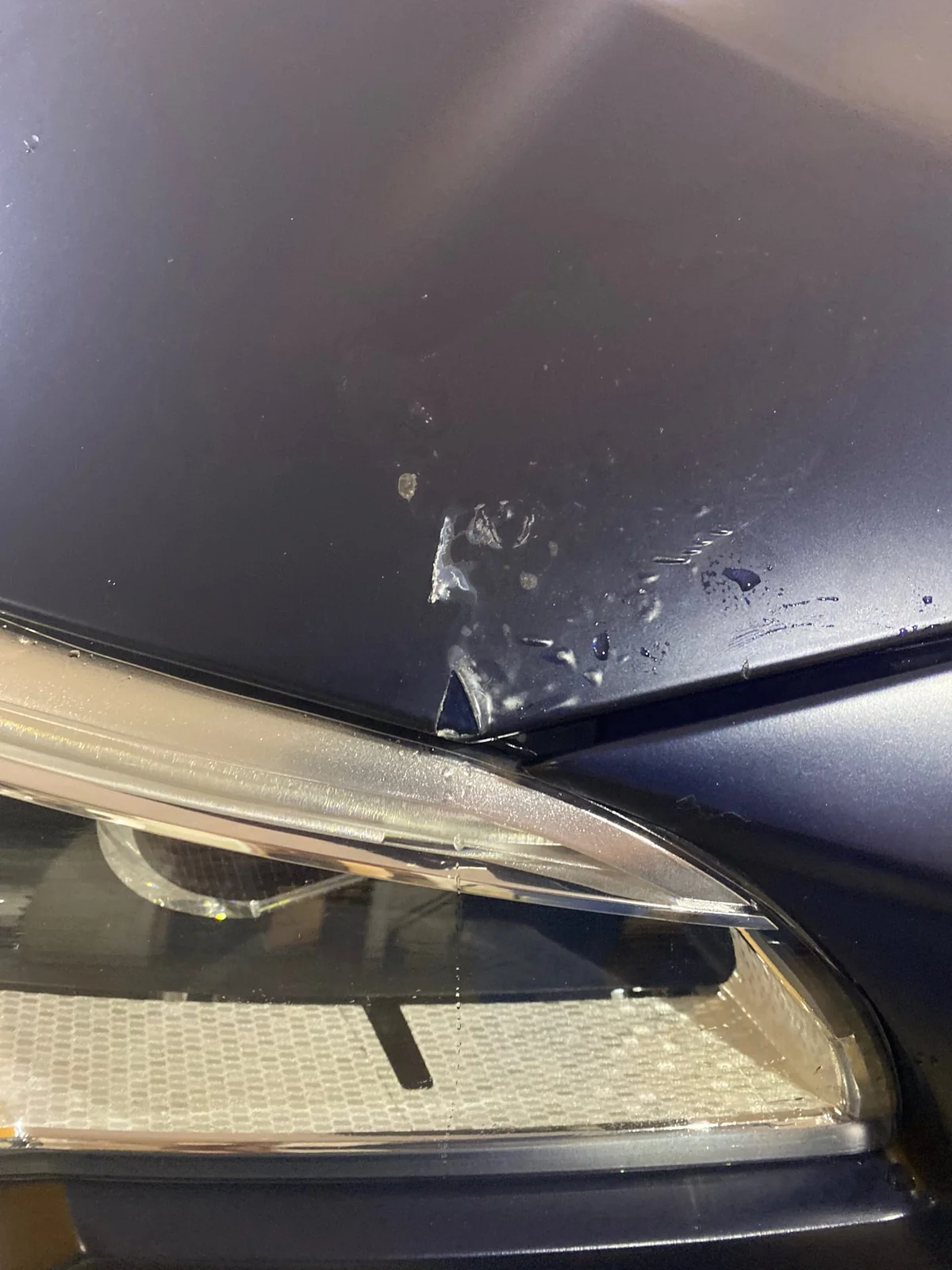
One thing worth being clear about, because it comes up later as a dispute: repeated lifting or peeling caused by careless washing is not covered by the manufacturer's warranty. That warranty covers film that fails on its own, not film damaged from outside.
Why film goes hazy, and how to avoid it
Film that looks cloudy is either film that never had good optical clarity in the first place — a property of the film itself, which does not change with care — or film whose top coat has collected fine scratches over time. The second is the one you can do something about.
The usual cause is not the sun. It is a dirty microfibre dragging dust across the surface. What makes this specific to Dubai is what the dust is: the main contaminant here is sand and construction dust, hard and sharp microparticles. It behaves nothing like the softer road grime found in Europe. Dragged across a soft film surface, it cuts fine scratches, and thousands of fine scratches read as haze.
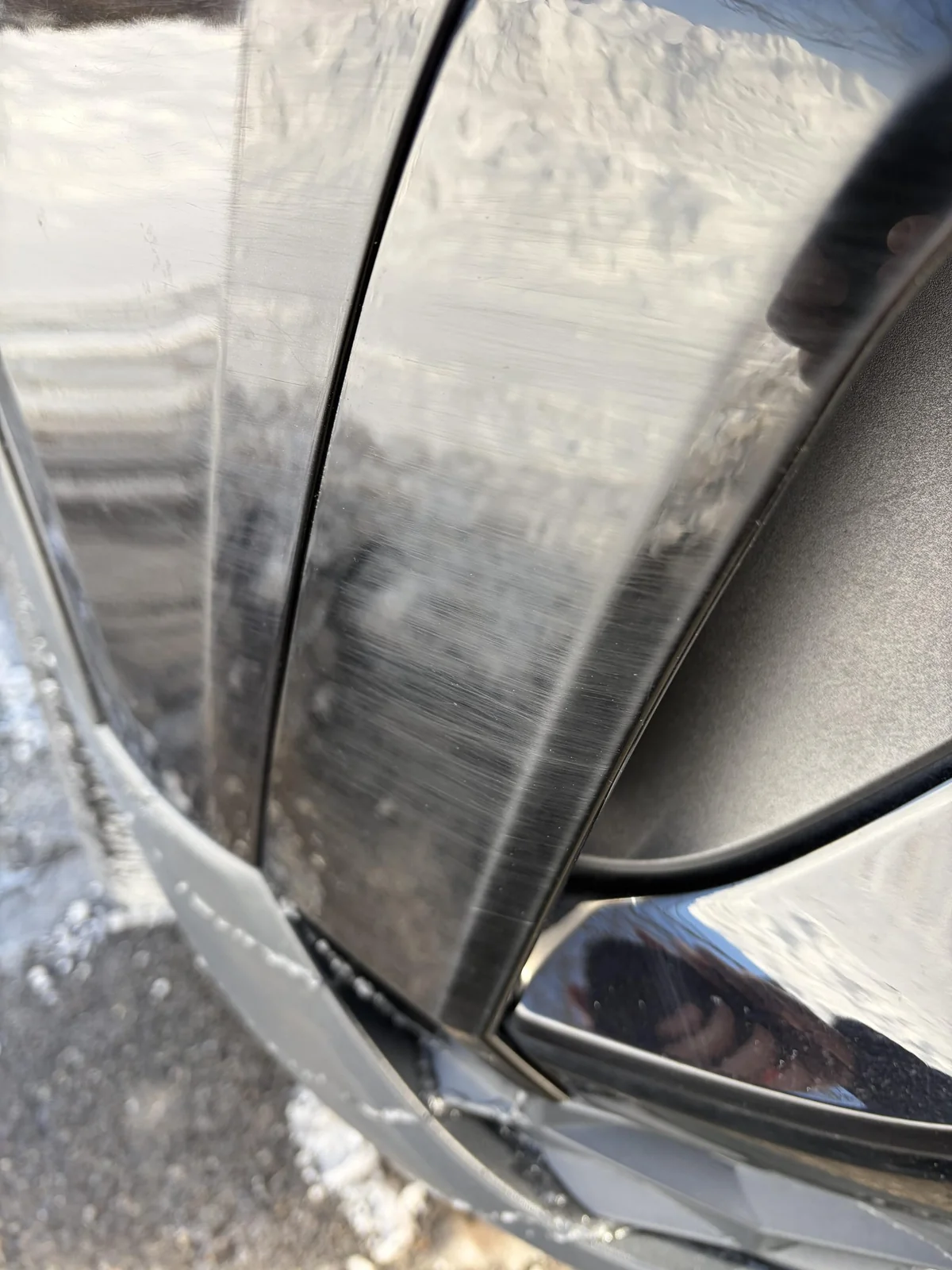
Two rules prevent almost all of it:
- Rinse before you touch. Loose sand comes off with water first. Anything you wipe before rinsing, you are grinding in.
- Clean microfibre only. A towel that has been dropped, reused or stored dusty is carrying the abrasive back onto the panel.
We also recommend a decontamination wash with us at least once a month — a wash designed specifically for filmed and ceramic-coated cars, and the simplest way to have the film looked at regularly before a small issue becomes a replacement.
What stains film here, and why speed matters
Film absorbs colour, so stains are a question of how long something sits on the surface rather than what it is. In Dubai heat, that window is short.
The usual sources:
- strongly coloured drinks
- bird droppings and insects
- water dripping from air-conditioning units
- poor-quality coloured car covers, which transfer their dye
- tree sap
Dirt does not stain film immediately. But left on the surface long enough in Dubai heat, it can leave a permanent mark — and a permanent mark on film means replacing that panel's film, not cleaning it. Rinsing something off the day it lands is the whole trick.
The car-cover point surprises owners most often: a cover bought cheaply can do more cosmetic damage to film than the sun it was bought to block.
Get a bespoke PPF quote
Share your car details with the Modcare team on WhatsApp.
The maintenance rhythm
| Service | How often | Why |
|---|---|---|
| Decontamination wash | Monthly | Keeps the film clean with the right materials, and gets it inspected regularly |
| Ceramic coating refresh | Every six months | Adds a hydrophobic, stain-resistant layer, so dust and dirt build up more slowly and the film stays glossier |
| PPF polishing | Every twelve months | Film can lose gloss over time. Polishing it, as you would polish paint, restores the original shine without replacing anything |
The last one is worth knowing about before you need it: film that has gone slightly dull is usually a polishing job, not a replacement job.
If you are still choosing a finish, our pages on paint protection film and satin and matte film cover the differences, and clear film explains the standard option.
Common questions
When can I wash the car after the film is fitted?
The first wash should be at your ten-day recheck, with us. Until then, leave the car unwashed — it leaves our studio clean.
I can see small bubbles. Is the film faulty?
Almost certainly not. Bubbles appear while film settles and dry out on their own in about 95% of cases. Do not press them: a pressed bubble can leave a permanent outline under the film.
The film has lifted slightly at one edge. Is that normal?
While the film is still damp, yes. Book a correction promptly: clean adhesive bonds back down, adhesive that has collected dust does not.
Can I take a filmed car through an automatic car wash?
You can — we simply do not recommend it. Over time it leaves the fine scratches described above. If you do use one, tell the staff the car has film, ask for a fresh microfibre towel and pH-neutral shampoo, and keep any pressure nozzle at least three feet from the surface.
Why does my film look slightly cloudy?
There are two explanations. Either the film never had proper optical clarity to begin with, which is a characteristic of the film itself and does not improve with care, or micro-scratches have built up on the top coat over time. The second is far more common here, and it comes from washing: Dubai sand is abrasive, and a dirty microfibre spreads it across the surface. Film dulled by scratching can often be polished rather than replaced.
Does a bird dropping ruin film?
Not if it comes off quickly. Film absorbs colour, and in Dubai heat a dropping left for days can leave a permanent mark that requires replacing the film on that panel.
How long is the film warranty?
At Modcare, the warranty on the clear glossy film is twelve years, and on the clear matte film ten years. Our workmanship cover has no fixed expiry.
Does the warranty cover peeling?
Peeling that happens on its own is covered. Peeling caused by careless washing or external damage is not.
Speak to Modcare
Ask about bespoke PPF and care for your car.